
You can do everything right in SEO and still lose.
Imagine this: you’ve spent months building your affiliate website. Your content is carefully written, optimized, and structured. Your backlinks are clean and relevant. Your technical SEO is dialed in. Everything looks exactly how it should.
And then one day — your traffic collapses.
Not a small drop. A complete crash.
Your rankings don’t just slide down a few positions. They disappear.
So you start investigating.
Content? Still strong.
Backlinks? No spam, no penalties.
Technical setup? Clean.
Yet something is clearly wrong.
This is where many website owners hit a wall — because they’re overlooking one of the most underestimated factors in SEO: the hosting environment.
Welcome to what many call the Bad Neighborhood Effect — a silent issue that can drag your rankings down without any obvious warning signs.
Why Your Hosting Environment Matters More Than You Think
Most people treat hosting as a purely technical decision: speed, uptime, maybe cost. But in reality, hosting can directly influence how search engines perceive your website.
A typical VPS gives you control and performance — but it often places your site on an IP address shared with other unknown websites.
And here’s the uncomfortable truth:
You don’t control who your “neighbors” are.
If one of those sites is involved in spam, shady SEO practices, or gets flagged by search engines, your site can be affected simply by association. This can impact:
- Your domain trust
- Email deliverability
- Crawl behavior
- Indexing speed
This is exactly why SEO-focused hosting solutions have gained popularity — not because they’re faster, but because they’re built to control risk.
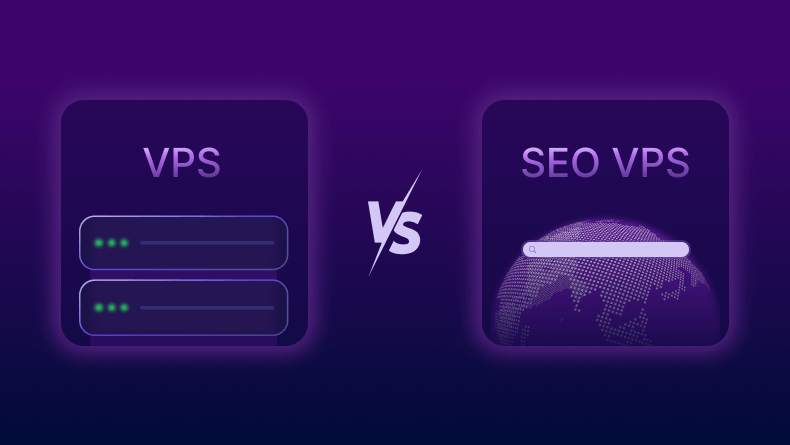
What Is a Traditional VPS?
A Traditional VPS (Virtual Private Server) is like living in a well-managed apartment building.
You have your own space. Your own resources. Your own environment.
Compared to shared hosting, it’s a big upgrade:
- Dedicated CPU and RAM
- Root access and customization
- Better performance and stability
- More control over applications
For most websites — blogs, e-commerce stores, SaaS tools — this setup is more than enough.
But there’s one limitation most people ignore:
You’re still sharing the same IP infrastructure.
Think of it like sharing the same address with dozens of other tenants. If someone in the building gets into trouble, the entire address can attract unwanted attention.
In hosting terms, this means:
- IP reputation is not fully in your control
- You may inherit issues you didn’t create
- Your SEO environment is partially dependent on others
For a single website, this risk is usually manageable. But for multiple sites, it becomes a serious vulnerability.
What Is SEO VPS Hosting?
SEO VPS hosting is designed with one specific goal: protecting and optimizing your SEO footprint.
Instead of placing all your sites under one IP or environment, it spreads them across multiple clean, isolated IP addresses — often from different classes (A, B, or C).
A better analogy?
If a traditional VPS is an apartment building, SEO VPS is like owning separate houses in different cities — each with its own address, identity, and environment.
This changes everything.
The Power of IP Diversity
At the core of SEO VPS is one key concept: IP diversity.
Why does this matter?
Because search engines analyze patterns.
If multiple websites are hosted on the same IP and heavily interlink, it becomes easy to detect that they are connected. When that happens:
- Links may lose value
- Networks become traceable
- Penalty risk increases
SEO VPS solves this by giving each site a unique identity.
Key Advantages:
1. Reduced Footprints
Each site appears independent, even if you own all of them. This is critical for affiliate networks and PBNs.
2. Clean IP Reputation
SEO VPS providers typically monitor and maintain IP quality, ensuring no history of spam or abuse.
3. Better Link Value
Backlinks between your sites are more likely to pass real authority when they come from separate IPs.
4. Safer Scaling
If one site gets penalized, others remain unaffected.
Performance: Is SEO VPS Faster?
Here’s where marketing can be misleading.
A traditional VPS is already fast — often more than enough for most projects.
SEO VPS doesn’t exist purely for speed. However, many providers bundle performance-focused features such as:
- NVMe SSD storage
- LiteSpeed servers
- Advanced caching (LSCache)
- Optimized Web Vitals
So while raw performance may be similar, SEO VPS often provides a more SEO-optimized stack out of the box.
Indexing and Crawl Efficiency
This is where differences become more noticeable.
With clean IPs and isolated environments, search engines may:
- Crawl your sites more efficiently
- Index new pages faster
- Trust your infrastructure more
For a single website, this advantage is minor.
For 10, 20, or 50+ sites, it becomes significant.
When a Traditional VPS Makes More Sense
Let’s be clear — SEO VPS is not always the better choice.
You should stick with a traditional VPS if:
- You run one main website
- Your focus is performance, not SEO scaling
- You don’t build interlinked site networks
- You don’t rely heavily on backlinks between your own projects
Example:
You run an online store or a SaaS platform. Your priority is speed, uptime, and user experience. IP diversity adds no real value here.
In this case, paying extra for SEO VPS is unnecessary.
When SEO VPS Is the Smarter Move
SEO VPS becomes valuable when your strategy involves scale and control.
You should seriously consider it if:
- You manage multiple affiliate sites
- You operate or plan to build a PBN
- You rely on interlinking for SEO growth
- You want to reduce footprint risks
Example:
You run 15 niche websites and use them to support each other through backlinks.
On a traditional VPS, they all sit on one IP — easy to detect.
On an SEO VPS, each site has its own clean IP — much harder to connect.
That difference alone can determine whether your links pass value or get ignored.
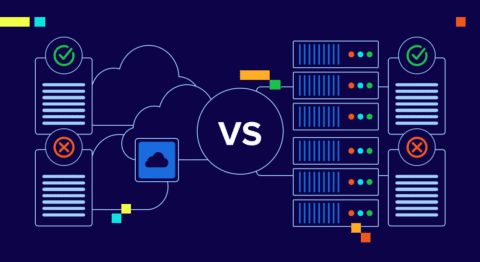
Cost vs Risk: The Real Decision
Let’s talk honestly about money.
SEO VPS typically costs around 10–20% more than a standard VPS.
At first glance, it feels like an unnecessary expense.
But look at it differently:
You’re not just paying for hosting.
You’re paying for risk reduction.
Traditional VPS:
- Lower monthly cost
- Higher exposure to IP-related issues
- Potential hidden SEO risks
SEO VPS:
- Slightly higher cost
- Cleaner environment
- Isolation between projects
- Reduced chance of network-wide damage
If your income depends on search rankings, this isn’t an expense — it’s insurance.
How to Choose the Right Setup
Don’t overcomplicate the decision. Focus on what actually matters:
- Storage: NVMe over HDD — always
- Server stack: LiteSpeed > Apache for SEO performance
- IP quality: Ask if IPs are monitored for blacklists
- Virtualization: KVM ensures proper isolation
- Location: Choose servers near your audience
- Support: You want a team that understands SEO, not just uptime
And most importantly:
Match your hosting to your strategy — not to marketing claims.
Final Verdict
There is no universal “best” option here — only the right tool for your situation.
A Traditional VPS is reliable, affordable, and perfect for most standard websites. If you’re running a single project and focusing on performance, it will serve you well.
But if your business revolves around SEO — especially at scale — then SEO VPS gives you something a traditional setup cannot:
Control over your footprint.
Control over your risk.
Control over how your sites are perceived.
And in SEO, perception often matters just as much as reality.
Simple rule:
- One site → Traditional VPS
- Multiple SEO-driven sites → SEO VPS
Choose based on where you’re going, not just where you are right now.